
What to Do After Your DEXA Scan: Muscle, Body Fat, and Visceral Fat Explained (Boston Guide)
You booked a DEXA scan in Boston. You got the results.
Now you’re staring at numbers like lean mass, body fat percentage, and visceral fat, wondering what any of it actually means—and what you’re supposed to do next.
If this sounds familiar, you’re not alone. We see this all the time with people getting DEXA scans across Boston—Back Bay, South End, Downtown, and beyond.
This guide walks you through how to interpret your DEXA scan results and—more importantly—how to act on them.
First: Why a DEXA Scan Is Different From a Scale
A bathroom scale tells you weight.
A DEXA scan tells you what that weight is made of.
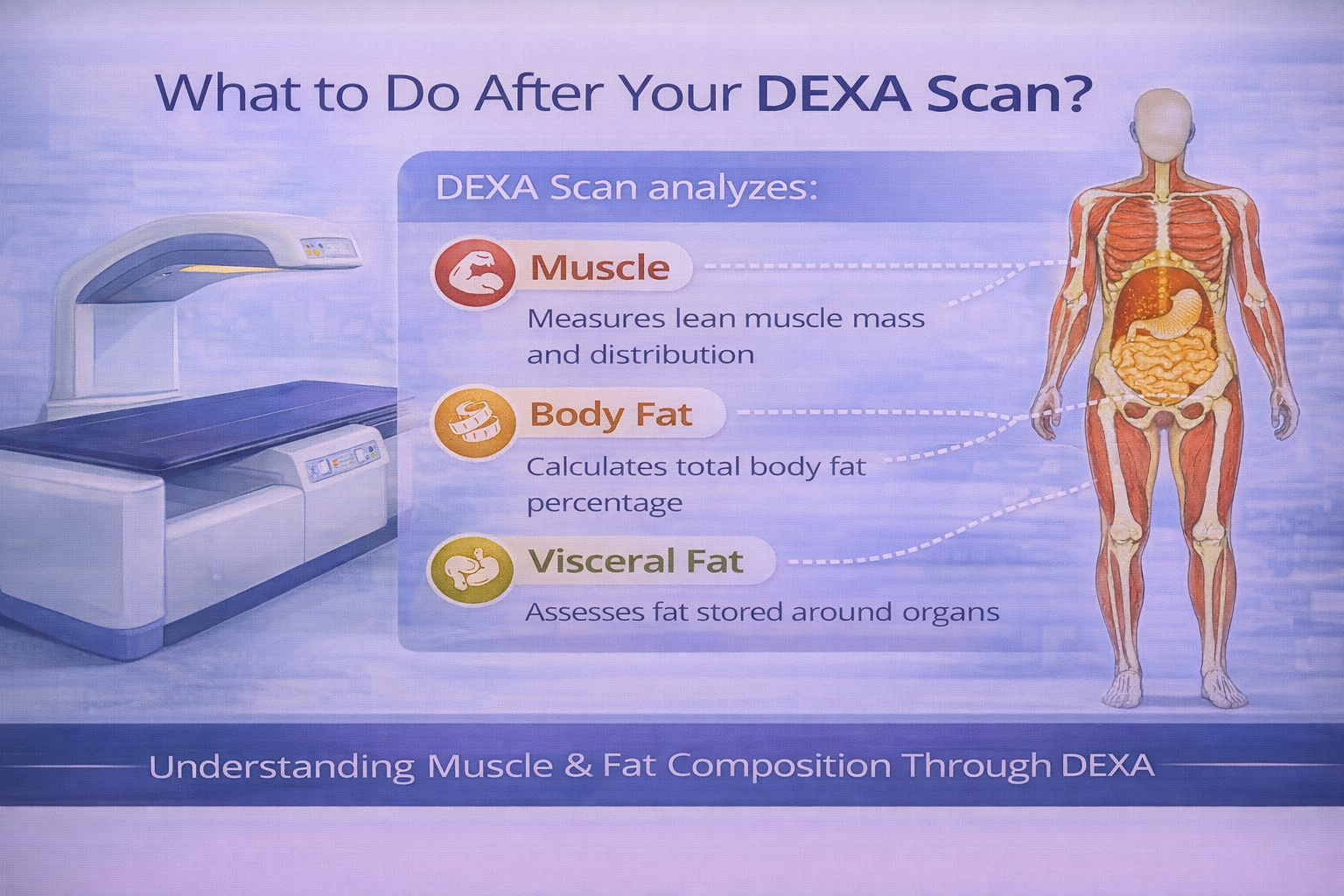
With a DEXA scan, you can see:
How much muscle (lean mass) you have
How much body fat you’re carrying
How much of that fat is visceral fat—the type linked to metabolic disease
This matters because two people can weigh the same and have very different health risks.
Understanding Your Muscle (Lean Mass) Results
What Lean Mass Means
Lean mass includes:
Skeletal muscle
Organs
Bone and connective tissue
From a health standpoint, muscle is protective. Higher lean mass is associated with:
Better glucose control
Higher metabolic rate
Better weight-loss maintenance
Lower risk of type 2 diabetes and age-related frailty
What to Do If Lean Mass Is Low
If your scan shows low or declining lean mass—especially if you’re trying to lose weight—this is a red flag.
Action steps:
Strength train 2–3 days per week
Use challenging weights (not just light toning)
Focus on progressive overload (getting stronger over time)
Avoid aggressive calorie cuts without resistance training
This is especially common among busy Boston professionals returning to exercise after years off. If that’s you, this guide may help:
👉 How to Get Back Into Strength Training After Years Off (https://www.firstguessfitness.com/blog/strength-training-after-years-off)
Muscle loss during weight loss is common—but not inevitable when training is done correctly.
Understanding Your Body Fat Results
What Body Fat Percentage Tells You
Total body fat includes:
Subcutaneous fat (under the skin)
Visceral fat (around organs)
DEXA gives you regional and total fat data, which is far more useful than BMI or scale weight alone.
What to Do If Body Fat Is High
If body fat is elevated:
Aerobic exercise becomes essential
Nutrition matters (exercise helps—but works best with a calorie deficit)
Strength training should stay in to protect muscle
Best approach:
150+ minutes per week of moderate aerobic activity (brisk walking counts)
Strength training 2–3x/week
Daily movement (steps matter more than people realize)
Fat loss works best when exercise types are combined, not chosen in isolation.
Understanding Visceral Fat (The Most Important Number)
What Is Visceral Fat?
Visceral fat is fat stored deep in the abdomen, surrounding organs like the liver and pancreas.
High visceral fat is linked to:
Insulin resistance
Type 2 diabetes
Heart disease
Fatty liver disease
This is the most clinically important number on your DEXA scan.
What to Do If Visceral Fat Is High
Research is very clear here:
Aerobic exercise is the most effective tool
Moderate-to-vigorous intensity works best
More total movement = better outcomes
What works best:
Brisk walking, cycling, jogging, or intervals
150–300 minutes per week
Structured exercise > casual steps alone
Strength training helps—but aerobic exercise drives visceral fat loss.
Putting It All Together: A Simple Post-DEXA Action Plan
If your goal is better health—not just a lower number on the scale—your plan should include all three pillars:
1. Strength Training
2–3 days per week
Full-body or upper/lower splits
Focus on building or preserving muscle
2. Aerobic Exercise
At least 150 minutes per week
Brisk walking is enough to start
Higher intensity = greater visceral fat reduction
3. Daily Movement
Work toward ~10,000 steps/day
Break up long sitting periods
Some steps should be intentional and brisk
This combination improves body composition, metabolic health, and long-term outcomes better than any single approach alone.
When to Re-Scan
A DEXA scan isn’t a one-time test—it’s a feedback tool.
Most people benefit from:
Re-scanning every 3–6 months
Using results to adjust training and nutrition
Tracking composition changes, not just weight
Fat loss, muscle gain, and visceral fat reduction happen at different speeds—DEXA lets you see progress even when the scale stalls.
Final Takeaway
Your DEXA scan doesn’t give you a grade.
It gives you information.
The goal isn’t perfection—it’s direction.
When you understand:
Where you carry fat
How much muscle you have
Which risks matter most
You can build a plan that actually works.
Ready to Act on Your DEXA Results?
If you’ve had a DEXA scan in Boston and aren’t sure how to turn those numbers into a clear, realistic training plan, that’s normal. The scan is just the starting point.
At First Guess Fitness, we specialize in helping people:
Use DEXA data to guide training decisions
Preserve muscle while losing fat
Reduce visceral fat safely and sustainably
Get back into strength training—even after years off
👉 Learn more about training with First Guess Fitness and take the guesswork out of your next step. (https://www.firstguessfitness.com/starter-pack)
Bio: Dr. Justin Kompf is a Boston-based exercise scientist, personal trainer, and behavior change specialist with more than 15 years of coaching experience. He is the Fitness Director for WeightWatchers Clinic and the co-owner of First Guess Fitness, a semi-private personal training studio located in Downtown Boston.
Justin holds a PhD in Exercise and Health Sciences, where his research focused on how people build lasting fitness habits through motivation, identity, and practical behavior change strategies. His work blends scientific rigor with real-world coaching, helping people develop strength, confidence, and consistency—especially those restarting after long breaks, navigating busy schedules, or working toward weight-loss and metabolic health goals.